Village Updates

Visit the Clubhouse Cafe

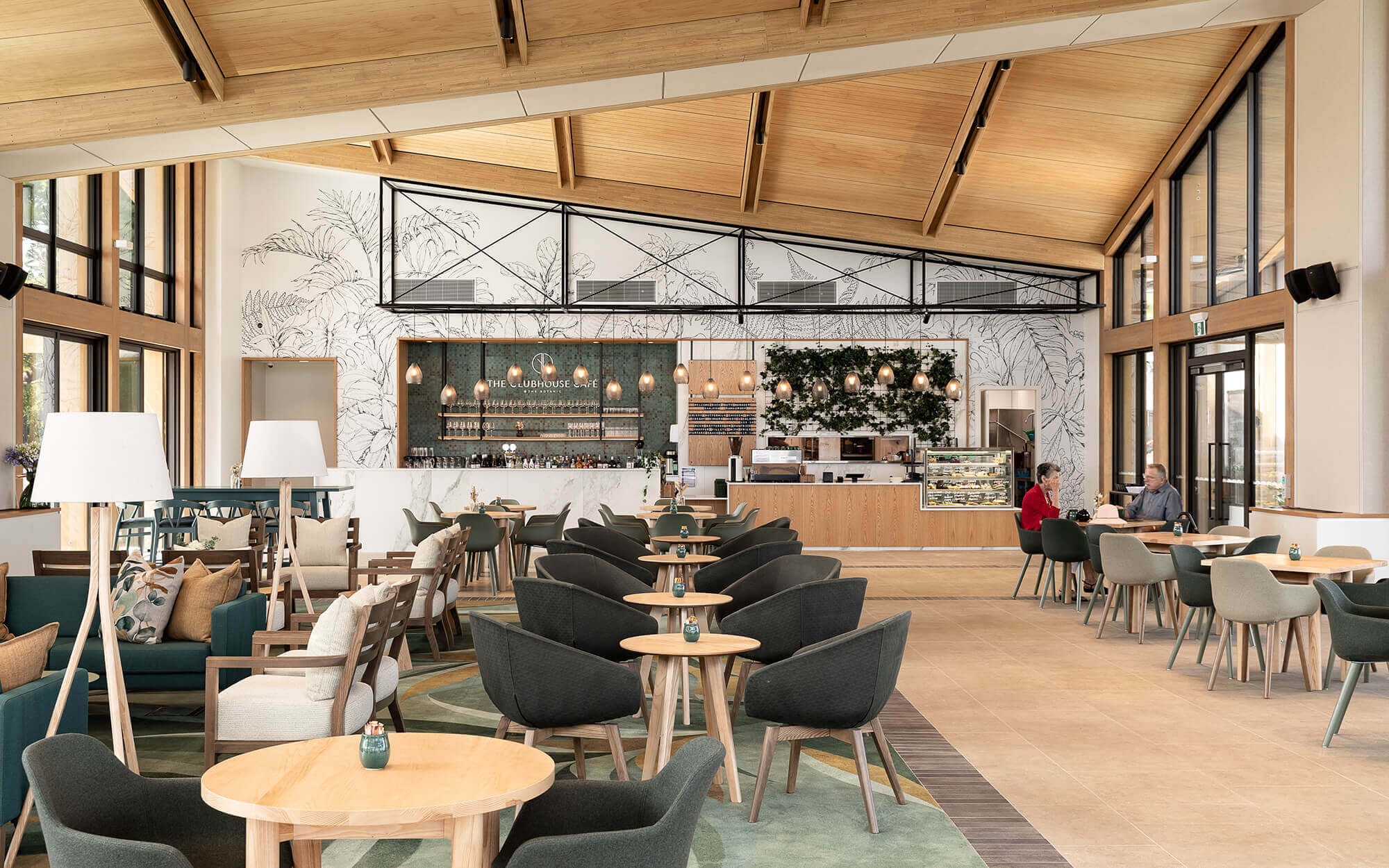
The Clubhouse Café is one of Silverdale’s best café restaurants.

Bookings aren’t essential but if you’d like to dine on Friday and Saturday evenings, we do recommend you making a booking. Just call 027 389 3511 or email theclubhousecafe@thebotanic.co.nz and we’ll pop your name in the book.

Our menu is skilfully prepared by our talented team of chefs, and we have an extensive range of cabinet food which is freshly made and updated throughout the day with sweet and savoury treats. There is always great coffee, a fresh Curry Of The Day, and you can enjoy a glass of wine or a craft beer from our well-appointed bar. 

The Clubhouse Café hours are:

8am-3pm: Sunday to Thursday

8am-7pm: Friday and Saturday.

Frequently Asked Questions

What are the opening hours of The Clubhouse Café at The Botanic Silverdale?

The Clubhouse Café is open Sunday to Thursday from 8am to 3pm, and Friday and Saturday from 8am to 7pm. Whether you’re after a morning coffee, lunch, or a relaxed evening meal, the café offers a welcoming space for both residents and visitors.

Do I need to make a booking to dine at The Clubhouse Café?

Bookings aren’t required, but they are recommended for Friday and Saturday evenings due to high demand. To reserve a table, you can call 027 389 3511 or email theclubhousecafe@thebotanic.co.nz, and the team will happily confirm your booking.

What type of food and drinks does The Clubhouse Café offer?

The café serves a diverse menu prepared by skilled chefs, featuring both sweet and savoury cabinet options that change throughout the day. Guests can enjoy freshly brewed coffee, a daily curry special, and a selection of wine or craft beer from the bar, making it one of Silverdale’s best café restaurants for any occasion.

Published 5 June 2024

Recent Posts

How Retirement Village Ownership Works in NZ

When you move into a New Zealand retirement village, you do not buy the property outright. Instead, you purchase an Occupation Right Agreement (ORA), sometimes called a license to occupy, which gives you the legal right to live in your home for as long as you choose. This is governed by the Retirement Villages Act 2003 and comes with meaningful protections, but it works very differently from freehold ownership. You pay an entry payment upfront, contribute to weekly fees while you live there, and receive a refund when you leave, minus a Deferred Management Fee (DMF). Understanding how this works before you sign anything is one of the most important steps you can take. Introduction: What Is an ORA and How Is It Different from Freehold? If you have spent most of your life owning your home outright, the idea of moving into a retirement village and not holding a title to your property can feel a little unfamiliar. That is completely understandable, and it’s exactly why it pays to understand how retirement village ownership works in New Zealand before you get too far into the process. The short version is this: rather than purchasing a property in the traditional sense, you enter into what is known as an Occupation Right Agreement, or ORA. This is a legal contract between you and the retirement village operator that gives you the right to occupy your chosen villa or apartment for as long as you wish to live there. In New Zealand, around 95 per cent of retirement village units are sold under a licence to occupy agreement, making the ORA by far the most common arrangement in the sector. Just over 50,791 people currently live in retirement villages across the country, and that number is growing rapidly as New Zealand's population ages. At The Botanic Hibiscus Coast, as with all registered retirement villages in New Zealand, the ORA is the foundation of your residency. It’s designed to be transparent, fair, and clearly understood before you commit. The sales team at The Botanic can walk you through every aspect of the agreement, and you will also receive independent legal advice before signing anything, as required by law. Section 1: Key Terms Explained in Plain English Retirement village documents can sometimes feel like they were written for lawyers rather than people. Here’s a straightforward guide to the terms you are most likely to encounter. Occupation Right Agreement (ORA) - The legal contract that gives you the right to live in your retirement village home. An ORA sets out the terms on which you can live in the village, along with the rights and obligations of both you and the village operator. At The Botanic, your ORA covers everything from how your home is maintained to what happens when you decide to leave. Occupation Licence - Another name for the right granted by an ORA. It’s not a title to the property; it’s a licence to occupy a specific unit within the village. The terms are often used interchangeably. Entry Payment - The lump sum you pay to secure your home in the village. At The Botanic, this reflects the type of home you choose, whether that is a villa or apartment, and covers your right to occupy the property and enjoy all of the village's amenities. Weekly Fee - An ongoing contribution toward the upkeep of shared facilities, maintenance, staff, insurance, and communal amenities. At The Botanic, this fee is currently fixed for life, so there are no surprises when it comes to budgeting. Deferred Management Fee (DMF) - A fee that the village operator deducts from your entry payment when you leave. It’s sometimes described as a management fee that is "deferred" until the end of your residency rather than charged upfront. At The Botanic, the DMF is calculated at 10% per year for three years, meaning it will not exceed 30% of your entry payment. This structure is typical of the sector, where the entry payment is refunded when you surrender the ORA after the village operator deducts a Deferred Management Fee. Disclosure Statement - A document the village operator is required by law to provide before you sign your ORA. It sets out the village's financial information, key terms, and other details to help you make an informed decision. Code of Residents' Rights - A set of legally guaranteed protections for all retirement village residents in New Zealand, extracted from the Retirement Villages Act 2003. The Code of Residents' Rights guarantees fair treatment and access to dispute resolution, including the 15-working-day cooling-off period. Cooling-Off Period - Residents under every ORA have the benefit of a 15-working-day cooling-off period. Residents can terminate the ORA within 15 working days of signing it without having to give any reason, and any deposit will be refunded. Retirement Villages Act 2003 - The primary piece of legislation governing retirement villages in New Zealand. Its purpose is to protect the interests of residents and intending residents of retirement villages, and to enable the development of retirement villages under a legal framework that is readily understandable by residents, intending residents, and operators. Section 2: What You Buy and What You Do Not Buy This is the section that tends to generate the most questions, and rightly so. It’s important to be clear on what you are and are not getting when you enter into an ORA. What you do get: A secure, legally protected right to occupy your chosen home in the village for as long as you wish to live there Access to all of the village's shared amenities and facilities; at The Botanic, that includes the 20-metre indoor heated pool, spa, sauna, steam room, fully equipped gym, Community Gardens, bowling green, and the award-winning Clubhouse Cafe The peace of mind that comes from living in a purpose-built, well-maintained environment with professional management on site Legal protections under the Retirement Villages Act 2003, including the Code of Residents' Rights and the 15-working-day cooling-off period The ability to end your residency at any time by giving 30 days' notice The poolhouse includes a 20m heated swimming pool, sauna, spa, and gym. What you do not get: Freehold title to your property. Retirement village living differs from home ownership in several key areas. One of the key distinguishing features is that you do not "own" outright the apartment, villa or suite as with a freehold title to a home. The ability to sell or transfer the property independently Automatic participation in any capital gain on the property (though at The Botanic, specific arrangements around capital gain may apply; the sales team can explain any current offers in detail) The responsibilities that come with freehold ownership, such as managing maintenance, rates, and insurance yourself For many people, particularly those who have spent years maintaining a larger family home, this trade-off is actually one of the appealing things about retirement village living. The day-to-day responsibilities of property ownership are handed over, freeing up time and energy to enjoy life. It’s not the right arrangement for everyone, though, which is why it is so important to understand it fully before committing. It’s also worth knowing that an intending resident must receive independent legal advice before signing the occupation right agreement. This is not optional. At The Botanic, the sales team actively encourages prospective residents and their families to seek both legal and financial advice as part of the process. Section 3: Fees, Exits, and Resale Basics Understanding the financial mechanics of a retirement village is essential, particularly for adult children who may be helping a parent through the decision-making process. The entry payment and your refund When you move into The Botanic, you pay an entry payment that reflects the home you have chosen. This money is held securely. When you leave, whether that is because you are moving to aged care, moving to be closer to family, or for any other reason, the entry payment is refunded to you or your estate, less the DMF. At The Botanic, the DMF is a maximum of 30% (10% per year for three years), meaning at least 70% of your original entry payment comes back to you. Weekly fees Your weekly fee covers the running costs of the village, including maintenance, staffing, facilities, and insurance. At The Botanic, this fee is fixed for life, which is an important distinction. Knowing exactly what you will pay each week, regardless of what happens to inflation or market conditions, makes financial planning much more straightforward. Leaving the village You can leave at any time by giving 30 days' notice. The village operator is then responsible for finding a new resident for your home. At The Botanic, if we haven’t sold your home after six months, we have a penalty clause specific to The Botanic and we will pay interest on the amount owning. Capital gain In a standard ORA arrangement, the capital gain on your property goes to the operator, not to you. At The Botanic, this is something the sales team can discuss in the context of any current or limited time offers. Upcoming changes to the Act The Retirement Villages Act 2003 is currently being reviewed by the New Zealand Government. Section 4: Questions to Ask Before Signing Whether you are visiting The Botanic for the first time or have already toured the village and fallen in love with it, there are some important questions worth asking before you put pen to paper on an ORA. Your lawyer will have their own list, but these are a good starting point. About the ORA itself: What is the total entry payment, and what does it include? What is the weekly fee, and is it fixed or subject to increases? What is the exact DMF structure, and how is it calculated? What happens to any capital gain if my home is resold at a higher price? What are the conditions under which the operator can change the terms of my residency? About leaving and resale: What is the process if I need to move into higher-level care? How long does resale typically take, and when would I or my estate receive a refund? Are there any costs involved in the exit process beyond the DMF? About the village itself: What amenities are currently available, and which are planned for the future? What does the weekly fee cover, and what would I need to pay for separately? What is the process for resolving a complaint or dispute? Is there a Residents' Committee, and how does it work? About financial and legal protection: Can you provide the village's latest disclosure statement? Is the village registered with the Companies Office? (All retirement villages in New Zealand must be registered; you can verify this at the Companies Office website.) Will I be required to have independent legal advice before signing? At The Botanic, every prospective resident is encouraged to take the time they need, ask every question they have, and involve their family and professional advisors in the process. The sales team, Michelle and Kathryn, are experienced, patient, and happy to go through the details as many times as it takes to feel confident. Why The Botanic Approaches This Differently Most of this article applies to retirement villages across New Zealand. What sets The Botanic Hibiscus Coast apart is not just the quality of its homes and amenities; it’s the transparency and care with which the team approaches the process of helping people understand what they are signing up for. The Botanic is one of Auckland's leading luxury retirement villages, with more than 200 residents already calling it home. The village is purpose-built on the beautiful Hibiscus Coast in Silverdale, less than five minutes from the Hibiscus Coast Bus Station and the Northern Motorway, making it well connected to everything the wider Auckland region has to offer. Homes at The Botanic include single-level 1, 2 and 3-bedroom villas with internally accessed garages and spacious, light-filled Rimu apartments, all set within beautifully landscaped gardens. Amenities include the Clubhouse Cafe, a 20-metre indoor heated pool, spa, sauna, steam room, fully equipped gym, Community Gardens, and a three-rink bowling green. A future care centre with hospital-level care and memory care is also planned, so residents can have confidence that a full continuum of care will be available within the same familiar community if their needs change over time. Understanding the financial structure of your ORA is the foundation of a confident, well-informed decision. The team at The Botanic is committed to making sure that every prospective resident and their family has everything they need to reach that confidence before they sign. To arrange a visit, speak with Michelle or Kathryn on 0508 268 264, or complete the contact form on The Botanic website. Frequently Asked Questions What is an Occupation Right Agreement (ORA) in simple terms? An ORA is a legal contract that gives you the right to live in a retirement village home for as long as you choose. You do not own the property in the freehold sense, but you have a secure, legally protected right of occupancy. The agreement sets out what you pay, what you receive in return, and what happens when you decide to leave. How is an ORA different from buying a house? When you buy a house, you receive a freehold title and you own the property outright. With an ORA, you are purchasing the right to occupy the property, not the property itself. This means you are not responsible for the same maintenance and insurance obligations as a homeowner, but it also means you do not hold the property as an asset in the traditional sense and typically do not benefit from capital gain. What is a Deferred Management Fee and why does it exist? The DMF is the village operator's charge for managing and maintaining the village over the course of your residency. Rather than being charged upfront, it is deducted from your entry payment when you leave. At The Botanic, the DMF is 10% per year for three years, capped at 30% of the entry payment. Is my entry payment safe? Yes. The Retirement Villages Act 2003 includes provisions to protect residents' entry payments. All retirement villages must be registered, and they are subject to ongoing oversight. Independent legal advice is required before signing an ORA, and the cooling-off period provides an additional layer of protection. What protections do I have as a retirement village resident? Residents are protected by the Retirement Villages Act 2003, the Code of Residents' Rights, and the village's Code of Practice. These cover your right to fair treatment, consultation on changes to services and fees, access to dispute resolution, and the 15-working-day cooling-off period after signing your ORA. Can I leave the village whenever I want? Yes. You can end your residency at any time by giving 30 days' notice. The village is then responsible for finding a new resident and processing your refund, less the applicable DMF. Do I need a lawyer to sign an ORA? Yes. The Retirement Villages Act 2003 requires that all intending residents receive independent legal advice before signing an ORA. This is a legal requirement, not just a recommendation, and is an important protection for you. What happens to my home if I need to move into aged care? If you need to move into a higher level of care, your ORA can be surrendered and the refund process begins. At The Botanic, the planned on-site aged care home means residents may be able to transition within the same community, which provides significant reassurance for residents and their families alike. Where can I find out more about the Retirement Villages Act 2003? The Ministry of Housing and Urban Development is the best place to start for official information on the Act, resident rights, and the current review process. Your lawyer will also be able to guide you through the specific details of your ORA. For more information about life at The Botanic Hibiscus Coast, visit thebotanic.co.nz or call the sales team on 0508 268 264. The Botanic is located at 17 Small Road, Silverdale, Auckland.
Read more

Questions to Ask on a Retirement Village Tour

A good retirement village tour should leave you with clear answers in three areas: daily life and community (what an ordinary week actually looks like), the financial and contract terms (entry payment, weekly fees, exit costs), and future care (what happens if your needs change). The best approach is to write your questions down before you arrive, ask the same questions at every village you visit, and request everything in writing rather than relying on memory afterwards. At The Botanic Hibiscus Coast, prospective residents are welcome to bring this list along to the Spring Open Weekend from Friday 25 to Sunday 27 September, and the sales team will work through every question with you in detail. Introduction: Why the Right Questions Matter More Than the Brochure By the time you book a retirement village tour, you have probably already done a fair amount of homework online. You have read the website, looked at the floor plans, and perhaps compared a few villages on paper. But the tour itself is where the real decision-making happens, because this is where you get to ask direct questions and see how honestly and thoroughly they are answered. This matters more than people sometimes expect. A retirement village is not a short-term decision. More than 53,000 people currently live in retirement villages throughout New Zealand, and most are planning to stay for a decade or longer. Getting clear, specific answers before you commit is one of the most important things you can do to feel confident in your choice. Yet many people find that once they are standing in a beautifully presented show home, with a friendly sales manager and a tempting morning tea on offer, it’s easy to forget the practical questions they meant to ask. That is completely normal; it happens to almost everyone. The solution is simple: write your questions down in advance, bring the list with you, and ask the same questions at every village on your shortlist so you can compare the answers fairly. This guide sets out the questions worth asking in three key areas, plus a printable checklist you can take with you on tour. We will also tell you exactly how The Botanic Hibiscus Coast answers each of these questions, and how you can put these questions directly to the sales team at our upcoming open event: the Spring Open Weekend, Friday 25 to Sunday 27 September. Section 1: Daily Living and Community Questions This is where most people start, and for good reason. Day-to-day life is what you will actually be experiencing, so it deserves the most attention on your tour. What does a typical week look like for residents? Ask the sales manager to walk you through an actual weekly activities calendar, not a generic description. Are there clubs and groups that residents themselves have started? Is participation optional, or does it feel like there is pressure to join in? At The Botanic, the activities programme is largely resident-led. The Hub hosts regular sessions including art classes, a Ukulele Group, a Travel Club, card and board games such as Bridge, 500, and Mahjong, and a variety of exercise groups – from Armchair Yoga to Strength, Balance and Agility and Dance Fitness classes. The Clubhouse Cafe runs Tuesday@Two events featuring guest speakers on topics ranging from health to travel and history. A wide range of social events in The Clubhouse are put on by residents, including regular events such as the Whiskey Appreciation Group and Housie. Ask to see the current month's calendar; if a village cannot produce one readily, that tells you something. Can I talk to current residents, without a staff member present? This is one of the most telling questions you can ask. A village that is confident in the experience it offers will have no hesitation in letting you speak to residents directly, ideally without a sales representative hovering nearby. You’ll find residents are actually the people who meet, greet and show you around at The Botanic, with Sales team members available to chat to in each of the showhomes.At The Botanic, The Clubhouse Cafe is open to the public seven days a week from 8am. This means you do not need to schedule a formal appointment to experience the atmosphere; you can simply visit, have a coffee, and observe how residents and staff interact naturally. Studies show that sharing meals doesn't just address issues of loneliness; it may also help to increase nutritional intake, so it’s worth asking whether communal dining is available and, if so, whether you can try it during your visit. The Botanic has an official village communal table on Saturday evenings, so book in for dinner and ask if you’re able to join! What are the floor plans actually like, and how do they compare? Ask to see a genuine range of floor plans, not just the show home. Pay attention to storage, natural light, indoor-outdoor flow, and whether the bathroom and kitchen are designed with future mobility needs in mind. At The Botanic, homes include one, two, and three-bedroom single-level duplex villas with internally accessed garages, and one, two, and three-bedroom Rimu apartments. If you are touring during the Spring Open Weekend, you will be able to walk through the apartment floor plans in person and ask detailed questions about layout, finishes, and specifications on the spot. You may wish to make some changes to a villa or apartment – for example, creating a painted or wallpapered feature wall, changing two dish drawers to one larger dishwasher, or adding a wine fridge or changing a cupboard’s layout etc. Village management staff welcome efforts to make your villa or apartment your own, and are very accommodating of these at The Botanic, but be sure to talk them through with the Sales team. What security and safety measures are in place? Ask specifically about 24-hour emergency call systems, after-hours contact arrangements, and how the village handles things like a resident not answering a wellness check. Is there overnight security personnel on hand, is the village gated or secured somehow from vehicles or non-residents walking around? Are pets welcome? For many people, this is a non-negotiable. Ask about any restrictions on type, size, or number of pets, and whether there are facilities like a dog walking area. Can family and grandchildren visit and stay? Ask whether overnight guest accommodation is available, and whether there are any restrictions on visitors, including grandchildren staying over school holidays. At The Botanic we are often asked, ‘are they allowed to use the pool?!’ The answer of course, is yes! Section 2: Financial and Contract Questions This is the section where it pays to be the most thorough, and where the answers you receive can vary significantly from village to village. Every registered retirement village in New Zealand operates under the Retirement Villages Act 2003, but the specific financial terms within that framework differ considerably between operators. What is the entry payment, and what exactly does it include? Ask for a clear, itemised breakdown rather than a single headline figure. The exact fees and inclusions vary between villages, so it is worth asking the sales manager for a breakdown of what is covered. What is the weekly fee, and is it fixed for life or variable? This is one of the single most important financial questions you can ask, because it has a direct and ongoing impact on your budget for as long as you live in the village. Weekly fees are required to increase with proper notice if the village's terms allow for increases, so it is worth establishing upfront whether your fee is fixed or can change. Ask specifically whether the weekly fee covers interior maintenance of your home, or only the exterior and grounds. Weekly fees typically go towards costs like insurance, rates, and exterior home maintenance, as well as amenities, staff wages, and other village services, but the exact inclusions vary between villages. At The Botanic, the weekly Village Fee is $185 per week (discounted from $215 while the Manuka Care Centre which will offer hospital-level, rest-home and memory care is under construction) and is fixed for life. It includes rates, water rates, building insurance, upkeep of the grounds, both internal and external maintenance of your home, upkeep of all communal facilities, rubbish removal, security, and the salaries of all staff who deliver village services. Even a 20% discount at The Clubhouse Café is built into the fee. What is the Deferred Management Fee, and is there a cap? Ask for the exact percentage charged per year, the maximum cap, and whether there are any additional exit costs such as refurbishment or marketing fees on top of the DMF. Industry guarantees vary - so make sure you understand the terms of the DMF and what this will mean for you and your loved ones in the future. At The Botanic, the DMF is calculated at 10% per year for three years, capped at a maximum of 30% of the entry payment. There are no refurbishment charges on exit, excluding wilful damage or deterioration beyond fair wear and tear. What happens if I want to leave shortly after moving in? Ask whether there is a money-back guarantee period, and exactly what conditions apply. At The Botanic, a 90-day money-back guarantee applies: if a resident decides within 90 days that the village is not the right fit for them socially, they receive a full refund with no DMF charged. How long would it take to receive a refund if I left the village? Ask about the typical timeframe for resale and refund. This is an area currently under review by government. The Retirement Villages Amendment Bill is expected to be introduced into Parliament by mid-2026, with proposed changes including a maximum repayment timeframe to give residents greater certainty. Am I exposed to any capital loss, and do I share in any capital gain? Under a standard Occupation Right Agreement, the village operator is responsible for costs such as rates, insurance, and exterior maintenance, and typically retains the capital gain when a unit is resold. Ask directly whether any capital gain-sharing arrangement applies, and under what conditions. Is the village registered, and who is the Statutory Supervisor? The Retirement Villages Act requires all retirement villages to be registered with the Registrar of Retirement Villages, and residents are not protected by the Act if they are living in an unregistered village. You can verify a village's registration directly at the Companies Office retirement villages register. Ask who the Statutory Supervisor is and what role they play in protecting your interests. Am I required to get independent legal advice? Yes, this is a legal requirement, not an optional extra. The Retirement Villages Act requires lawyers to provide advice to intending residents on the general effect of the agreement before you sign. Ask whether the village facilitates this process and whether you will be given a disclosure statement to take to your lawyer well in advance of signing. Section 3: Future Care and Support Questions This is the area many people are reluctant to think about during a tour, but it is one of the most important to address upfront. Choosing a village that can support you well into the future avoids the stress and disruption of needing to move again later on. Does the village offer a continuum of care? A key consideration when comparing villages is whether they provide several levels of care so that residents do not need to move elsewhere if their needs change. Ask specifically whether resthome, hospital-level, and dementia or memory care are available on site, or only at a separate facility. At The Botanic, a future Manuka Care Centre on-site with an aged care home with hospital-level care and specialist memory care suites is in development, aiming to be completed in 2028. This means residents who choose The Botanic can plan with confidence, knowing that a higher level of care will be available within the same familiar community if it is ever needed. Is there a registered nurse or clinical support on site now? Ask whether there is qualified clinical support available day to day, separate from any future care facility. At The Botanic, an on-site Registered Nurse with more than 20 years of hospital and community nursing experience is available for appointments and general health queries. She can see you in her clinic at The Botanic, or visit you in your home. Our Sales Manager Michelle provides guided tours What home-based support services are available? Residents who are assessed as needing care can typically receive home-based support in almost every village, but the scope and cost of this support varies. Ask what services are available, how they are arranged, and what the additional costs would be. How does the village handle changing mobility needs within a home? Ask whether homes are designed with features like step-free access, wider doorways, or adaptable bathrooms, and whether modifications can be made later if needed. What is the process if my partner needs a higher level of care than I do? This is a sensitive but important question for couples. Ask specifically how the village supports couples where one partner's needs change before the other's, and whether they can remain close to one another within the same community. Section 4: Printable Tour Question List Print this list, or save it to your phone, and bring it with you to every village you visit. Asking the same questions everywhere makes it far easier to compare your options fairly afterwards. Daily living and community What does a typical weekly activities calendar look like? Can I speak to current residents without a staff member present? Is communal dining available, and can I try it during my visit? What security and emergency call systems are in place? Are pets welcome, and are there any restrictions? Can family stay overnight, and are there restrictions on visitors? What floor plans are available, and how do storage and natural light compare across unit types? Financial and contract What is the exact entry payment for the home I am considering, and what does it include? Is the weekly fee fixed for life, CPI-linked, or variable at the operator's discretion? Does the weekly fee include interior maintenance, or only exterior and grounds? What is the Deferred Management Fee percentage and the maximum cap? Are there any additional exit costs beyond the DMF? Is there a money-back guarantee period, and what conditions apply? What is the typical timeframe for resale and refund after I leave? Do I share in any capital gain, or am I exposed to capital loss? Is the village registered with the Companies Office, and who is the Statutory Supervisor? Will I be required to get independent legal advice before signing? Future care and support Does the village offer a continuum of care on site? Is there a registered nurse or clinical support available now? What home-based support services are available, and what do they cost? How are mobility needs accommodated within the home design? What happens for couples if one partner needs a higher level of care before the other? Download: If you would like a print-friendly version of this list, please click the link below, and you will be able to download and print our list of questions to ask on a retirement village tour, wherever you plan to visit. Free Download - Questions to Ask on a Retirement Village Tour Bring This List to The Botanic Hibiscus Coast There is an upcoming opportunity to put these questions directly to The Botanic's sales team and see the answers for yourself. Spring Open Weekend: Friday 25 to Sunday 27 September. This larger event gives you the chance to tour the full village, including the villas, the amenities, and the wider grounds, and to speak with current residents about life at The Botanic. Special offers are often available exclusively over open weekends, so it is worth asking the sales team what is currently on offer. At this event, Michelle and Kathryn will be on hand to work through every question on your list in as much detail as you need, with no pressure and no rush. Independent legal and financial advice is actively encouraged before any commitment is made, and the $5,000 hold deposit required to secure a home is fully refundable if you choose not to proceed. To register for the event or to arrange a private tour at another time, call 0508 268 264 or visit the contact page at thebotanic.co.nz. The Botanic is located at 17 Small Road, Silverdale, Auckland. Frequently Asked Questions What is the most important question to ask on a retirement village tour? There is no single most important question, but if you only had time for a few, focus on whether the weekly fee is fixed for life, what the Deferred Management Fee structure and cap are, and what level of care is available now and in the future. These three areas have the biggest long-term impact on your financial position and your peace of mind. Should I bring someone with me on a retirement village tour? Yes, this is strongly recommended. Bringing a family member or trusted friend means you have a second set of ears, and someone to discuss your impressions with afterwards. It is always useful to discuss your options and decision with your immediate family, other relatives and friends before making a final choice. How many villages should I visit before making a decision? There is no fixed number, but most guidance suggests visiting several villages, ideally more than once each, and at different times of day, before narrowing down your shortlist. Asking the same set of questions at each one is the best way to compare your options on equal terms. Can I attend an open day or open evening without committing to anything? Yes. Open days and open evenings, including The Botanic's upcoming Spring Open Weekend, are designed to be a relaxed, no-obligation opportunity to explore the village, ask questions, and get a genuine feel for the community. There is no expectation that you will make a decision on the day. What should I ask the sales manager about fees specifically? Ask for a complete, itemised breakdown of the entry payment, the weekly fee and what it includes, the Deferred Management Fee structure and cap, and any additional costs that might apply on exit. A good sales manager will be able to answer all of these clearly and provide written documentation to take away. Is it normal to feel pressured during a retirement village tour? No, and if you feel pressured, that is worth taking seriously as a signal. A reputable village will give you time to think, encourage you to visit more than once, and actively support you in seeking independent legal and financial advice before you commit to anything. What documents should I ask for before I leave a village tour? Ask for a disclosure statement, a copy of the village rules, a written breakdown of all fees and costs, and a sample Occupation Right Agreement to take to your lawyer. At The Botanic, this documentation is provided as standard as part of the sales process. To register for the Spring Open Weekend on Friday 25 to Sunday 27 September, call Michelle or Kathryn on 0508 268 264 or visit thebotanic.co.nz/contact-us. The Botanic is located at 17 Small Road, Silverdale, Auckland.
Read more

The Botanic Hibiscus Coast: Where Life Moves Easier – Even In A Fuel Crisis

In a time when fuel prices are climbing, household budgets are tightening, and Auckland traffic continues to test patience, where you live matters more than ever. At The Botanic Hibiscus Coast, location isn’t just a feature; it’s a lifestyle advantage. Positioned just moments from the Hibiscus Coast Bus Station, residents enjoy a level of convenience, cost-effectiveness, and everyday ease that’s becoming increasingly rare. This is more than proximity to transport. It’s about freedom - freedom from rising fuel costs, from the stress of driving, and from the hidden expenses of car ownership. It’s about living smarter, lighter, and with greater peace of mind. A Smart Response to Today’s Challenges New Zealand is currently feeling the pressure of a global fuel crisis and rising living costs. As fuel prices surge, more Kiwis are rethinking how they get around. Many are turning to public transport as a practical and immediate way to cut costs. Research from the University of Auckland highlights just how powerful this shift can be. Public transport is not only more affordable on a per-trip basis, but it also reduces overall household spending and eases congestion, which in turn lowers fuel consumption even further. For residents of The Botanic, this isn’t a future possibility; it’s already built into daily life. Right Next Door: The Hibiscus Coast Bus Station The Hibiscus Coast Bus Station is one of Auckland’s most well-connected transport hubs, offering frequent, reliable services across the region. With high-frequency Northern Express services, it has been designed to make commuting simple and comfortable. From here, you can be in Auckland’s city centre in as little as 25 minutes, often bypassing motorway congestion via the Northern Busway. Or head north to Warkworth or out to the Whangaparaoa Peninsula - there's no shortage of regular routes and destinations to choose from. For Botanic residents, the real luxury is just how close it all is. No long drives to a station. No stressful parking searches. Just a short 3-4 minute stroll from your front door, and you’re on your way..! The Real Cost of Driving vs Public Transport It’s easy to underestimate the true cost of owning and running a car. Fuel is just the beginning. There’s insurance, maintenance, registration, parking, and the wear and tear that quietly adds up over time. By contrast, public transport offers a predictable, manageable expense, often significantly lower than the cost of driving, especially during peak congestion when fuel consumption rises sharply. For many couples at The Botanic, this has led to a meaningful lifestyle shift. Julie Anne and Roger moved to The Botanic from Manly on the Whangaparaoa Peninsula, realising they no longer needed two cars with their newfound proximity to public transport. “Rog uses the bus most days to visit family in Big Manly.  Over the last 6 months, during which he hasn't been able to drive due to shoulder surgery, he also uses the bus to go to his physio appointments. We often take the grandchildren on the bus to Orewa, especially when there is an event on, as we don't have to worry about parking. Because of the bus station's proximity, it means we have downsized and now only own one car. ” This isn’t just about saving money - it’s about simplifying life. More Freedom, Less Stress Driving in Auckland can be unpredictable. Traffic congestion, parking challenges, and the rising cost of petrol all add layers of stress to what should be simple journeys. Living beside a major transport hub changes that entirely. Instead of navigating traffic, residents can sit back, relax, read, or simply enjoy the journey. Frequent services mean you’re not tied to rigid schedules, and direct routes make getting around easy. For Botanic residents Shaun and Glenda, even getting to the airport is much simpler via the Hibiscus Coast Bus Station. For less than $15 they can arrive at the International Airport without traffic or parking hassles, with just one simple bus change at Sky City to make. Staying Connected to What Matters One of the biggest advantages of living next to the bus station is how it keeps you connected to family, friends, healthcare, shopping, and entertainment. For Jill, who lives in a villa at The Botanic, proximity to the bus station meant her granddaughter Ella could visit every school day before walking to catch the bus, returning the same way each afternoon. Moments like these are what make a location truly valuable. Whether it’s a regular trip into the city, a visit to nearby coastal towns, or simply popping out for the day, the network of services makes it all accessible. Heather and Brian say the 3 - 4 minute stroll from their home to the bus stop couldn’t be more convenient. “We were at the station these school holidays, heading into the city with two of our grandchildren. It’s such a fantastic service - so easy and convenient for all of us.” The station connects seamlessly to local routes serving Orewa, Whangaparāoa, Warkworth and beyond, making it a true gateway to the wider region. Apartment resident Penny, who moved from Warkworth, finds the bus ideal for trips north to visit friends or attend appointments. A Lifestyle That Adapts With You As life evolves, so do your transport needs. What works today may not work tomorrow, which is why flexibility is so important. Having reliable public transport on your doorstep means you’re not dependent on driving forever. It provides an easy transition to a more relaxed, low-maintenance way of living. For many residents, this brings a sense of reassurance: Villa residents Brian and Margaret recently enjoyed a trip to the Edinburgh Tattoo via the bus. When they moved to The Botanic, the couple knew Brian's eyesight was going to become an issue eventually, so the reassurance of having the bus station nearby gives them confidence for the future.  Environmental and Community Benefits Beyond personal convenience and savings, choosing public transport also contributes to something bigger. Buses move more people using less fuel, reducing emissions and easing pressure on roads. Fewer cars mean less congestion, cleaner air, and a more sustainable community overall. At a time when New Zealand relies entirely on imported fuel, reducing dependence on private vehicles isn’t just environmentally responsible, it’s economically sensible. Living at The Botanic allows residents to be part of that positive shift, simply through everyday choices. The Hidden Luxury: Simplicity Luxury isn’t always about extravagance. Sometimes, it’s about removing friction from daily life. It’s the ease of stepping out your door and knowing everything you need is within reach. It’s the comfort of predictable costs in an unpredictable economy. It’s the peace of mind that comes from having options. At The Botanic, being next to the Hibiscus Coast Bus Station delivers all of this, quietly, consistently, and effortlessly. Designed for Living Well The Botanic is already known for its resort-style living, thoughtfully designed homes, and vibrant community. The addition of such a strategic location elevates that offering even further. Here, lifestyle and practicality work hand in hand. You can enjoy the tranquillity of beautifully landscaped grounds and premium amenities, while staying seamlessly connected to the wider world. A Smarter Way Forward As New Zealand navigates the realities of a fuel crisis and rising living costs, the way we live - and where we live - is becoming increasingly important. Choosing a home that supports a more efficient, cost-effective, and flexible lifestyle is no longer a luxury. It’s a smart decision. At The Botanic Hibiscus Coast, that choice is already made for you. Discover how effortless life can be when everything is within reach. Visit The Botanic and experience the convenience for yourself.
Read more